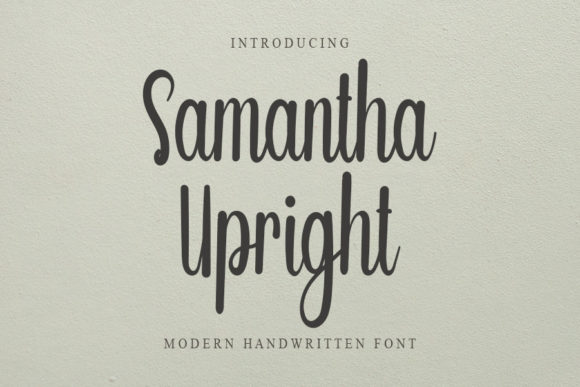
Samantha Upright: The Handwritten Font Balancing Class and Modernity
There’s a particular challenge in finding a typeface that feels personal without looking messy, and elegant without feeling stiff. Too often, handwritten fonts sacrifice legibility for flair, or they end up looking like a generic script you’ve seen on a dozen coffee shop menus. For designers, entrepreneurs, and creators building a brand or a project, this search for the right visual voice can be surprisingly frustrating. You need something that conveys warmth and approachability, but also carries a sense of professionalism and intention. This is the precise space where Samantha Upright operates, offering a solution that feels both timelessly classic and refreshingly current.
At its core, Samantha Upright is a premium handwritten font, but that simple description doesn’t quite capture its utility. It’s a carefully crafted typeface that draws clear inspiration from classic calligraphy, yet it has been designed with a contemporary eye. The strokes have a natural, flowing rhythm that feels genuinely human, avoiding the overly digitized or robotic feel that plagues some script fonts. Each letterform maintains a consistent upright posture, which is a key detail. This isn’t a slanted, cursive script; it’s an elegant, standing hand that improves readability while preserving a sense of personal touch. This balance is what makes it a versatile asset, not just a decorative one.
A Typeface for Real-World Branding and Communication
The true test of any font is how it performs in the wild, across the messy, varied demands of real projects. A beautiful font on a specimen sheet can fall apart when applied to a logo, a website header, or the text on a product package. Samantha Upright’s design considers these applications from the start. Its upright structure and careful spacing mean it holds up in contexts where many script fonts fail. Let’s break down where this typeface can genuinely shine and solve common design problems.
For brand identity work, this font excels at creating an immediate emotional connection. Imagine a boutique skincare brand, a wedding photographer’s portfolio, or a artisan bakery. Using Samantha Upright for the primary logo wordmark instantly communicates craft, care, and a personal touch. It’s less formal than a serif font and more distinctive than a standard sans serif, helping a brand stand out in a crowded market. The key is its ability to feel bespoke, as if a founder personally signed off on every package or social media post.
This personal quality translates powerfully into packaging design. On a label for handmade candles, gourmet jams, or specialty teas, the font adds a layer of perceived value. It suggests the product inside was made with attention to detail, not mass-produced. Its clarity ensures that essential information like the product name or a short, poetic description remains easy to read at a glance, which is critical on a busy shelf or in an online store thumbnail.
Practical Applications from Social Media to Print
Moving beyond static branding, Samantha Upright proves its worth in dynamic, everyday content creation. For social media graphics, it’s a standout choice for quotes, announcements, and story overlays. A handwritten font cuts through the noise of standard system fonts, adding personality to an Instagram post or a Pinterest pin. It pairs surprisingly well with clean sans serif fonts for body text, creating a hierarchy that’s both engaging and easy to digest. This kind of thoughtful font pairing is a simple yet effective way to elevate your visual content and boost engagement.
On websites and blogs, it should be used strategically. It’s not for long paragraphs of body copy. Instead, it’s perfect for pull quotes, section headers, author names, or call-to-action buttons where you want to inject personality. A blog about interior design could use it for post titles to reinforce a creative, hands-on ethos. The goal is to use it as an accent, a highlight that draws the eye and reinforces the site’s overall tone without compromising the readability of the main content.
For print materials and merchandise, the applications are equally robust. Think about wedding invitations, event posters, or thank-you cards. Samantha Upright provides the elegance and formality needed for such occasions while feeling more accessible than traditional copperplate scripts. For merchandise like tote bags, mugs, or t-shirts, it offers a charming, graphic quality that stands out. Its versatility as a display font means it can be the star of the show on a poster or a subtle, stylish detail on a business card.
Smart Integration into Your Design Workflow
Adopting a new font into your toolkit is about more than just liking how it looks. It requires considering how it will function within your existing systems and projects. The first practical step is to review the full font family. Does it include multiple weights or styles? Understanding the full range of design assets included with your license allows you to plan for consistency. You might use a bolder weight for headlines and a lighter weight for subtitles, all within the same visual family.
Next, rigorously test font pairings. Samantha Upright’s strength lies in its partnership with other typefaces. A common and effective strategy is to pair it with a neutral, geometric sans serif for body text. The contrast between the organic, humanist lines of the handwritten font and the clean, mathematical lines of the sans serif creates visual interest and clear hierarchy. Try pairing it with fonts like Montserrat, Open Sans, or Lato. Avoid pairing it with other highly decorative or script fonts, as this can create visual clutter and confuse the viewer’s eye.
Always prioritize readability. While Samantha Upright is designed for clarity, context matters. Test it at the actual size it will be viewed. A font that looks gorgeous in a 72pt headline on your screen might become illegible when used at 14pt for a subheading in a printed brochure. Check the spacing between letters (kerning) and lines (leading) in your design software. Small adjustments here can make a significant difference in professional presentation.
Finally, never overlook the commercial licensing terms. This is a non-negotiable part of using any premium font for professional work. Ensure the license covers your intended use—whether it’s for client work, digital products for sale, merchandise, or app development. A legitimate license protects you legally and supports the designers who create these essential tools. It’s a hallmark of a professional workflow and a step that separates serious creators from hobbyists who may run into legal issues down the line.
Ultimately, Samantha Upright is more than just a pretty script. It’s a strategic tool for visual communication. It bridges the gap between the desire for a human, relatable aesthetic and the need for professional, reliable performance. By understanding its personality and testing its applications thoughtfully, you can leverage it to build stronger brand recognition, create more engaging content, and present your projects with a polished, cohesive visual language that truly resonates with your audience.