Rivendell Font: The Secret to Vintage, Magical Design
There’s a certain kind of design that stops you mid-scroll. It feels handcrafted, steeped in history, and somehow both ancient and fresh all at once. You might see it on the label of a craft gin, the header of a boutique hotel’s website, or the title of a fantasy novel. Achieving that specific blend of classic elegance and mystical charm often comes down to one crucial choice: typography. This is where a typeface like Rivendell enters the conversation, not just as a font, but as a design tool with a distinct personality.
More Than Just a Blackletter Font
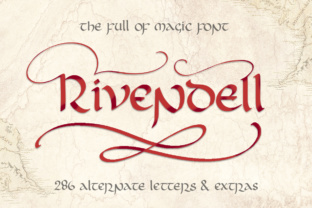
At its core, Rivendell is a blackletter font, a style that immediately evokes a sense of tradition and formality. But it’s not a simple imitation of medieval script. The designer drew inspiration from a symbiosis of historical writing styles, including Uncial and Caroline minuscule, resulting in something uniquely versatile. The letterforms have the weight and drama of classic blackletter, but with a refined elegance that prevents them from feeling archaic or difficult to read in modern contexts.
What truly sets this premium font apart is its wealth of alternate characters. With two variants for uppercase letters and nine for lowercase, you’re not just typing words; you’re crafting them. This allows for the creation of richly decorated, hand-drawn texts where no two letter combinations look exactly the same. Swashes and subtle variations add a layer of organic, artistic flair, making each headline or logo feel like a custom piece of calligraphy. This isn’t a one-note display font; it’s a system for creating typographic magic.
Where Does a Font Like This Actually Work?
The real test of any creative font is its practical application. A beautiful typeface that doesn’t solve a design problem is just ornamentation. Rivendell’s strength lies in its ability to bridge the gap between historical charm and contemporary design needs. Think about the projects that benefit from a touch of heritage and distinction.
For brand identity and logo design, it’s a standout choice for businesses that want to convey craftsmanship, tradition, or a storybook quality. Imagine it for a microbrewery, a leather goods artisan, a specialty coffee roaster, or a fantasy-themed bookstore. In packaging design, it can transform a simple product into a luxury item, perfect for gourmet foods, spirits, or artisanal cosmetics.
Beyond physical goods, its applications in digital and print are extensive:
- Editorial Design & Blogs: Use it for article titles, chapter headings, or pull quotes to add a sophisticated, literary feel.
- Social Media Graphics: Create eye-catching Instagram stories, Pinterest pins, or Facebook ads that stand out in a crowded feed, especially for announcements, quotes, or event promotions.
- Marketing Assets: Develop compelling web design headers, email newsletter banners, or digital product covers that demand attention.
- Print Materials: Design memorable business cards, event invitations, wedding stationery, or retro posters with a timeless quality.
- Merchandise: It’s ideal for modern t-shirts, unusual mugs, and vintage cards where the typography itself is a key part of the product’s appeal.
Practical Advice for Using Rivendell Effectively
Integrating a strong display font like Rivendell into your projects requires a thoughtful approach. Its power is also its potential pitfall—used carelessly, it can overwhelm. Here’s how to harness it well.
Pairing is Everything. Rivendell’s ornate nature means it needs a partner that complements, not competes. For body text, pair it with a clean, highly readable sans serif font or a simple serif font. This creates a visual hierarchy where the Rivendell headlines capture the mood and the supporting text delivers information clearly. Test your pairings at different sizes to ensure the contrast works.
Context is Key. Match the font’s personality to your project’s goals. Is your brand voice storytelling and heritage? Or is it modern luxury with a classic twist? Rivendell supports both, but the surrounding design elements—colors, imagery, and layout—will guide the final interpretation. For a luxury branding project, you might use it sparingly on a monochrome palette. For a vintage poster, you could embrace its full decorative potential with more color and texture.
Readability First. This is a non-negotiable rule. While alternate letters add beauty, ensure your final text is still legible. Avoid using it for long paragraphs of body copy. It shines brightest at larger sizes for headlines, logos, and short phrases. Always get a second opinion on readability, especially for critical applications like website headers or product names.
Explore the Alternates. Don’t just use the default characters. Experiment with the multiple uppercase and lowercase variants to find combinations that feel unique to your project. This is where the font’s value as a design asset truly comes alive, allowing you to create one-of-a-kind typographic compositions.
Understand the License. As a commercial font, ensure its license covers your intended use, whether for client work, merchandise, or digital products. Proper licensing is a fundamental part of professional design practice and protects your work.
A Tool for Creating Atmosphere
Ultimately, choosing a typeface like Rivendell is a decision about atmosphere. It’s for designers and creators who want to inject a sense of narrative, craftsmanship, and timeless elegance into their work. It doesn’t just spell out words; it tells a story of its own. By understanding its personality, pairing it wisely, and applying it with purpose, you can turn ordinary projects into memorable visual experiences that resonate with your audience on a deeper level. It’s a powerful addition to any designer’s toolkit, offering a bridge between the rich history of typography and the dynamic needs of modern visual communication.