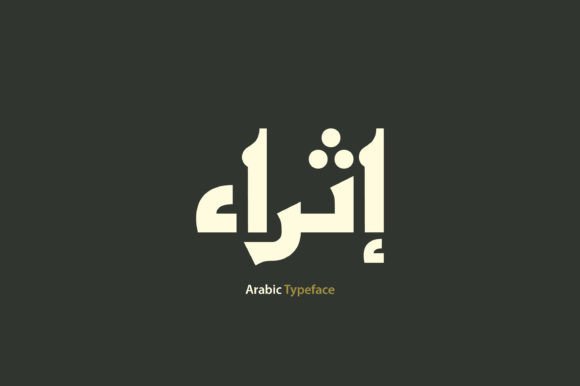
Ithra: A Modern Typeface Rooted in Ancient Calligraphy
There's a particular weight to Arabic calligraphy that's hard to replicate digitally. It carries centuries of scholarly tradition, architectural ornamentation, and artistic devotion. When a typeface manages to capture even a fraction of that history while remaining functional for contemporary design, it becomes something genuinely useful. Ithra does exactly that. Inspired by the Kufic styles of the Fatimid Dynasty, this Arabic display font bridges nearly a thousand years of visual culture with the demands of modern branding, web design, and print production.
A Font Built on Fatimid Foundations
The Fatimid period (909–1171 AD) produced some of the most distinctive Kufic calligraphy in Islamic art history. You'll recognize it in the geometric tilework of Cairo's mosques, in the borders of illuminated manuscripts, and carved into stone facades across North Africa and the Levant. Kufic script from this era tends to be angular, structured, and deliberate—each letterform feels like it was designed to hold its ground on a surface, whether that surface was a wall or a page.
Ithra draws from this visual DNA. The letterforms carry that geometric precision without feeling stiff or archaic. There's a balance here between historical authenticity and contemporary usability that many Arabic display fonts struggle to achieve. The strokes are clean, the proportions are measured, and the overall rhythm of the typeface feels intentional rather than decorative for its own sake.
For designers working on projects that need to reference Arab heritage—whether that's a cultural institution, a restaurant brand, or a publishing house—Ithra offers visual credibility without resorting to cliché. It doesn't look like a font that's trying to signal "Middle Eastern" through exaggeration. Instead, it quietly carries the sophistication of its source material.
Where This Typeface Actually Works
Display fonts live or die by context. A typeface that looks stunning on a poster might fall apart on a mobile screen. Ithra manages a reasonably wide range of applications, partly because its Kufic roots give it strong geometric clarity, and partly because it was designed with modern output formats in mind.
Branding and logo design are natural fits. If you're building an identity for a luxury brand, a cultural organization, or a product line that wants to convey heritage and quality, Ithra's letterforms give logos a distinctive silhouette. The angular construction creates strong negative space, which means logos stay legible even at smaller sizes or when embossed on packaging.
Speaking of packaging design, the font holds up well on physical products. Think about the constraints of a label or a box panel—you need type that reads clearly at a glance but also rewards closer inspection. Ithra's detailed letterforms do both. It works particularly well for food brands, artisan goods, and cosmetics lines that want to communicate craftsmanship.
Social media graphics present a different challenge. Instagram posts, story templates, and thumbnail images need type that grabs attention in a fraction of a second. Because Ithra has a strong visual personality, it functions well as a headline font for social content. Pair it with a clean sans-serif for body text, and you've got a combination that looks polished without being predictable.
For web design and blogs, the font works best in controlled doses—section headers, pull quotes, navigation elements, or hero text. It's a display typeface, which means it's engineered for impact rather than extended reading. Used strategically, it gives websites a sense of character that generic system fonts simply can't provide.
Print materials like posters, event invitations, editorial layouts, and magazine covers benefit from Ithra's strong visual presence. The Fatimid-inspired geometry translates beautifully to large-format printing, where the details of each letterform can really breathe. Wedding invitations, gala programs, and exhibition catalogs are all contexts where this kind of typographic distinction makes a meaningful difference.
Even merchandise and digital products—think tote bags, mugs, app interfaces, e-book covers—can leverage the font's distinctive aesthetic. Anywhere you need Arabic typography that feels considered rather than generic, Ithra earns its place in the design toolkit.
Making Typography Work for Your Brand
Choosing a font isn't just about what looks good in isolation. It's about what looks good in service of a specific goal. A typeface for a tech startup needs to communicate innovation. A typeface for a heritage brand needs to communicate legacy. Ithra leans toward the latter, but its modern construction means it doesn't feel dusty or outdated.
Here's a practical framework for deciding whether this font fits your project:
Start with your brand's personality. If your brand values include tradition, craftsmanship, cultural depth, or understated luxury, Ithra aligns naturally. If your brand is playful, minimalist, or ultra-modern in a Scandinavian sense, you might find it pulls your visual identity in a direction that doesn't match your messaging.
Test font pairings before committing. Display fonts rarely work alone. You'll almost certainly need a complementary typeface for body copy, captions, and interface text. Try pairing Ithra with a neutral sans-serif—something like a geometric or humanist sans—and see how the two interact at different sizes. The contrast should feel intentional, not accidental.
Check readability at your target size. Pull up the font at the actual size it will appear in your design. A header that looks magnificent at 72 points might lose clarity at 24 points. This matters especially for web and mobile applications, where screen rendering can affect how letterforms display.
Review all included font styles. Many premium fonts come with multiple weights, alternates, or stylistic variations. Before you start designing, take inventory of what's available. You might discover a lighter weight that works better for secondary text, or an alternate character that solves a spacing issue in your logo.
Readability, Licensing, and the Practical Stuff
No matter how beautiful a typeface is, it fails if people can't read it. With display fonts, readability is always a negotiation between visual impact and legibility. Ithra's Kufic-inspired geometry actually helps here—the angular forms create distinct letter shapes that differentiate clearly from one another, even at moderate sizes. That said, Arabic script carries inherent complexity, and display treatments amplify that. Use the font where it has room to be read: large headlines, short phrases, single words. Avoid setting paragraphs in it.
Licensing is another practical consideration that designers sometimes overlook until it becomes a problem. If you're using Ithra for a commercial project—a client's brand, a product you're selling, a paid app—make sure the license covers commercial use. Most premium fonts offer clear licensing terms, but it's worth confirming before you build an entire identity system around a typeface you might need to replace later. This is especially relevant for agencies and freelancers managing multiple client accounts.
For content creators and small business owners who aren't professional designers, the honest advice is this: invest time in learning how your font choices affect perception. Typography is one of the most powerful tools in visual communication, and the difference between a project that looks amateur and one that looks professional often comes down to type selection and spacing. A font like Ithra, with its strong historical references and refined construction, gives you a head start—but only if you use it thoughtfully.
The beauty of working with a typeface rooted in something as rich as Fatimid Kufic calligraphy is that it carries meaning beyond aesthetics. Every design choice communicates something. When your typography references a tradition of geometric mastery, intellectual pursuit, and artistic excellence, it adds a layer of substance to whatever you're building. Whether that's a brand identity, a publication, or a single social media post, the font you choose is never just decoration—it's part of the story you're telling.